The Friends of Cheasty Greenspace/Mt. View are having a trail-building work party this Saturday, September 1 from 10 a.m. until 12 noon. All interested neighbors are invited to pitch in to help build the new woodland trail.
Volunteers should meet at 2809 S. Alaska Place, one block west of Columbia City Station. Registration begins at 9:45 a.m.
Bring your own water and water bottle, sturdy shoes and layered work clothes. Gloves and tools will be provided for your use. Shared snacks are welcome.
The North Beacon Hill Council monthly meeting, usually on the first Tuesday of the month, is delayed this month because of Labor Day weekend. The meeting will be Tuesday, September 11 instead, at 7 p.m. at the Beacon Hill Library, 2821 Beacon Ave. S.
Here’s the agenda as forwarded from the Council:
Update on Internet connectivity in Beacon Hill: Representatives from UPTUN (Upping Technology for Underserved Neighbors) will be presenting with invited representatives from Comcast, Wave (formerly Broadstripe) and CenturyLink
Public Safety Update: Reports about an increase in street burglaries and updates on recent shootings in the Beacon Hill area
Airplane noise/Greener Skies: updates from FAA meetings
New Project Updates: Proposed developments in the neighborhood including El Centro, Holgate property, and McClellan project.
Other Neighborhood group updates from Friends of Lewis Park, Beacon BIKES and more
All interested neighbors are welcome to attend. Meetings usually end before 9 p.m.
A new sidewalk will soon make South Orcas Street a bit friendlier to pedestrians. The sidewalk is to be built on the south side of Orcas between 28th Avenue South (near the Chief Sealth Trail and Dearborn Park School) and 32nd Avenue South and will include ADA-compliant ramps, rebuilt driveways, and improvements to vegetation along with the new concrete sidewalk.
However, there is some pain to come before the promise of better walking conditions. During the project work, starting September 4, South Orcas Street will be closed for 24 hours a day to eastbound traffic between Beacon Avenue South and 32nd Avenue South. There will be an open sidewalk on the north side of the street. Completion of the sidewalk project is scheduled for October 31.
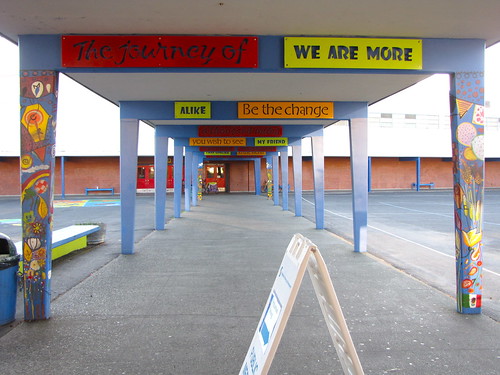
A brightly-painted walkway at Mercer Middle School. Photo by Wendi Dunlap.Asa Mercer Middle School on Beacon Hill has been honored as a “high progress Reward School,” one of the highest-performing and most-improved Title I schools in Washington state. (Title I schools serve populations with a high percentage of low income families. Schools with the Title I designation receive special funding and assistance.) Mercer is one of 58 schools in Washington to be named as Reward Schools.
High progress Reward Schools such as Mercer scored in the top 10 percent of Title I schools in combined reading and math on state assessments during a three year period (2008-2011). Mercer was also noted as a “School of Excellence” in 2009, 2010, and 2011, an honor given to schools placing in the state’s top 5 percent for improvement in scores.
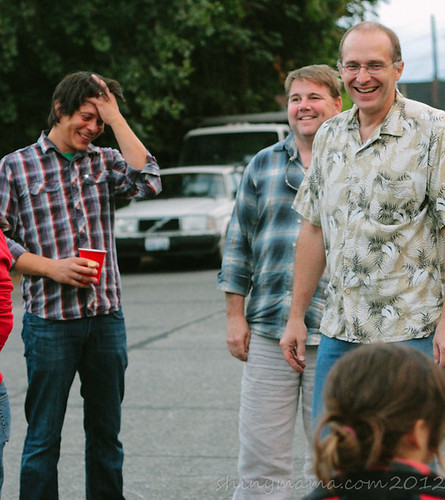
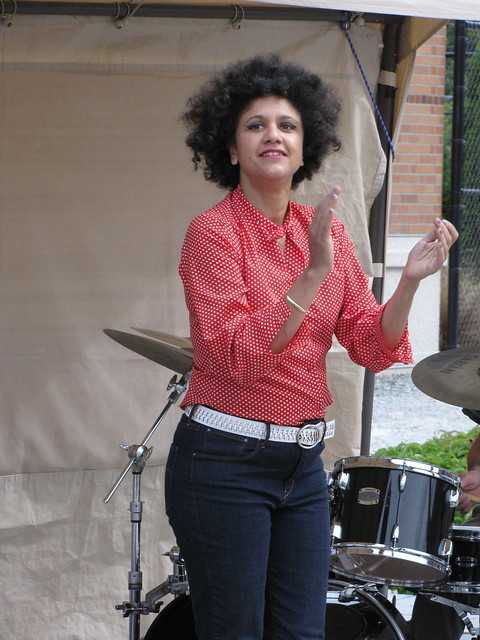
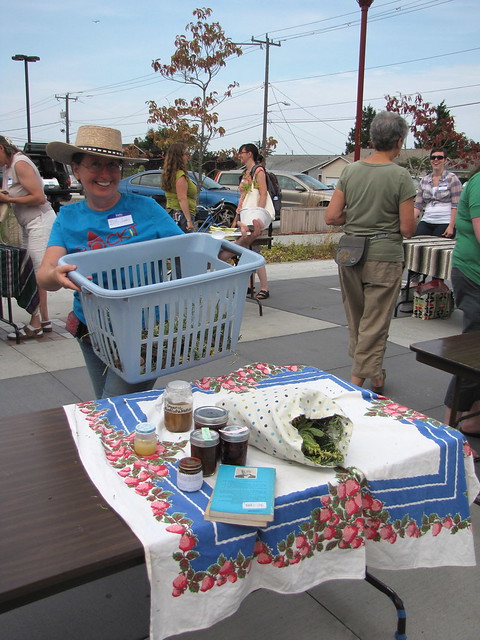
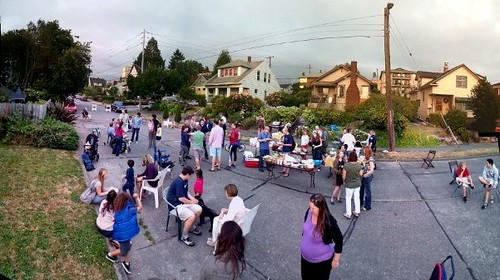
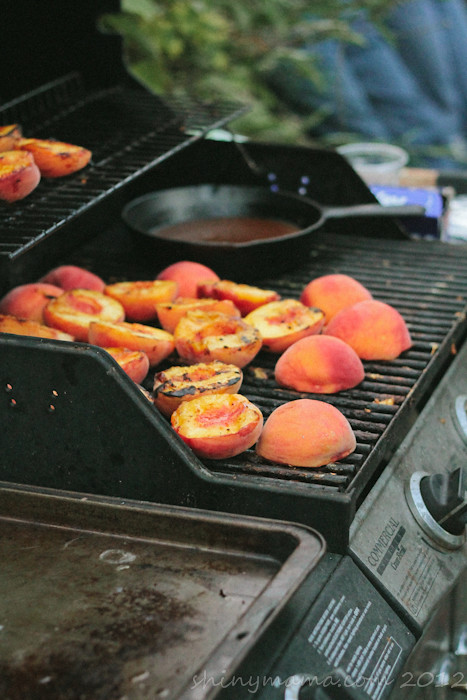
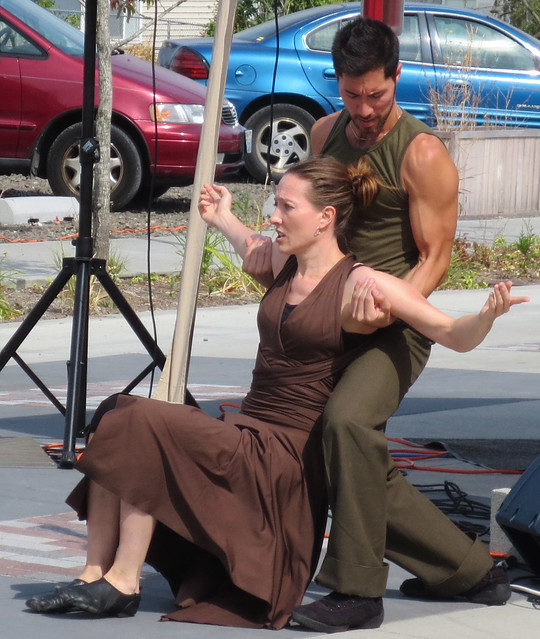
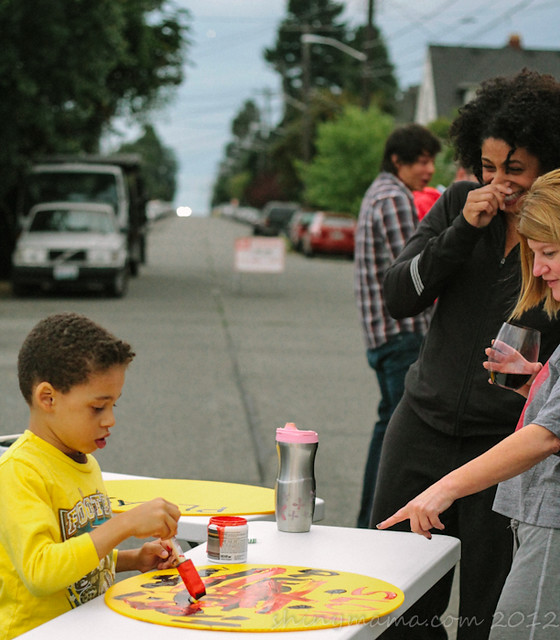
The last Beacon Rocks! of 2012, a neighborhood Peach Party, the Neighborhood Night Out, and more, all captured in photos from the Beacon Hill Blog photo pool on Flickr. Thanks to those who have contributed! Do you have photos of life on Beacon Hill? You’re invited to add them to the pool, too!
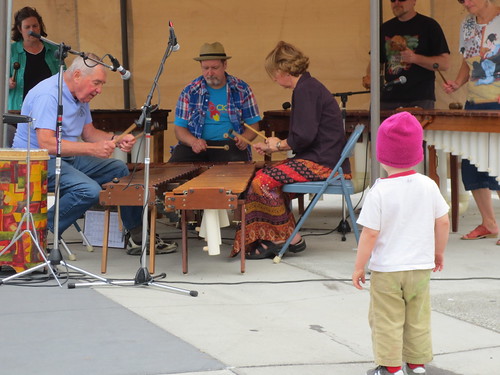
Neighbors enjoy themselves at the recent Beacon Hill Peach Party. Photo by Bridget Christian.Annabella of Lushy claps to the beat at Beacon Rocks! Photo by Wendi Dunlap.Neighbors took part in a “Backyard Barter” at Beacon Rocks!, trading homemade and homegrown food and veggies. Photo by Wendi Dunlap.Some neighbors took over a neighborhood street earlier this month for the Beacon Hill Night Out. Photo by SergeyS87.Grilling peaches at the Peach Party. Photo by Bridget Christian.Dancers from Splinter Dance perform at Beacon Rocks! Photo by Beacon Hill Music.More fun at the Peach Party. Photo by Bridget Christian.Enjoying Tumbuka at Beacon Rocks! Photo by Beacon Hill Music.
The ABC Supermarket at 2500 Beacon Ave. S. has applied for a new liquor license of the type “Grocery store: beer/wine.” The listed applicants are ABC Supermarket, Inc., James Che, Jenny Che, and Ky Ho. The license number is 354645.
If you’d like to make any comments on this application, whether positive or negative, e-mail customerservice@liq.wa.gov or send regular mail to:
Washington State Liquor Control Board
3000 Pacific Avenue SE
P. O. Box 43098
Olympia, Washington 98504-3098
This is the second in a series of three articles on the current plans and process to demolish the Jefferson Park Golf Clubhouse. See Part I here.
by Mark Holland and Mira Latoszek
The citizen golf activists: E.C. Cheasty And Sherwood Gillespy
Sherwood Gillespy.Soon after the first Olmsted Brothers preliminary report in 1903, and for two years after presentation of the 1912 Olmsted Seattle Park Plan, golfers lobbied the city to turn the planned 9-hole design into an 18-hole configuration. Among these pioneering golf activists were Seattle Park Commissioner E.C. Cheasty, and Sherwood Gillespy (1953-1912), who brought a petition with 1000 signatures to the City Council asking for an 18-hole course at Jefferson Park. Unfortunately, Sherwood Gillespy died in 1912, and his friend E.C Cheasty followed him the next year, passing away in 1913, never to play golf at Jefferson Park or know if they would succeed in bringing an 18-hole golf course to Beacon Hill.
Fortunately, their tireless dedication did pay off in 1914 when Seattle hired a renowned golf course architect to rework the original Olmsted 9-hole design. To honor the efforts of Sherwood Gillespy, his friends commissioned a statue of him with sculptor Max Nielsen of Denmark, and placed it in front of the first golf clubhouse in 1915. A round bronze plaque commemorates him with the inscription: “Erected by the friends of Sherwood Gillespy. A kindly, lovable man, an ardent golfer. The founder of the idea of a municipal golf course in Seattle.” Ninety seven years later, the weathered bronze statue of Sherwood Gillespy still stands in front of the Jefferson Park Golf Course Clubhouse, missing only his club.
Thomas Bendelow, architect of the Jefferson Park 18-hole golf course
Thomas Bendelow.In 1914, after a decade long lobbying effort by golfers, Seattle hired Scottish born golf course designer Thomas Bendelow (1868-1936). Known to work in a “naturalist” style, and often called “Olmstedian” in his approach, Thomas Bendelow was the logical choice to carry through the Olmsted vision into the 18-hole design. On May 12 of 1915, the Jefferson Park municipal golf course opened to the public. It was the first municipal golf course in Seattle. As testament to the timelessness of Bendelow’s design, the tees and fairways of the 18 remain much the same today as when the golf course first opened.
Thomas Bendelow, once disregarded as insignificant and even mediocre in golfing lore, is currently experiencing a revival. Thanks in part to the historical research and work of his grandson Stuart Bendelow, and a trending popularity in golf industry media, Tom Bendelow is now regarded as one of the most prolific golf course designers in American history. It is said more Americans learned to play golf on Bendelow-designed courses than those of any other golf course architect. As an early promoter of municipal golf courses, Tom Bendelow was at the forefront of the movement for municipal golf in the United States. In fact, he was often called the “Johnny Appleseed of Golf.”
In 1895, at the start of his career, he designed the first 18-hole municipal golf course in the America, converting a 9-hole course into an 18 at Van Cortlandt Park in the Bronx. Working for the Spalding Company (1900-1920), Tom Bendelow designed golf courses all across the United States. It is estimated he designed anywhere from 488 to 1000 golf courses throughout his career. He is well known as the architect of the famous Medinah Golf Courses outside of Chicago, home of many professional golf tournaments. In 2005, Tom Bendelow was inducted into the Golf Hall of Fame.
Beacon Hill and the Rainier Valley are seeing a wave of jewelry robberies, say Seattle Police. In just over a week, there have been more than 20 incidents of these robberies on streets, at bus stops, and at stores in Southeast Seattle.
According to police, the suspects typically either grab people from behind, or walk up to them, ask a question, and then grab the victims’ jewelry and purses. Police believe the series of robberies began on August 14, when two suspects robbed a woman on Beacon Hill after she left a local market.
One neighbor, Anna, commented here on the BHB about being victimized in a recent street robbery:
“I was robbed last week, and a shoulder bag was taken from me. It happened mid-morning, on Beacon Avenue near the golf course. It was two young African-American men; they came up behind me, grabbed the bag, and ran. I reported it to the police, but I wonder how many people this has happened to who didn’t report it.
“I’ve lived on Beacon Hill forever, and I am always aware of my surroundings and who’s around me, but this is the first time I’ve been afraid to walk around in my own neighborhood during the day. I’ve not been out walking much since it happened, and I don’t know when I’ll feel safe enough to do so on a regular basis.”
If you have any information about these crimes, please contact the SPD Robbery Unit at (206) 684-5535.
Plan ahead — Jefferson Community Center will close for four days next month for an electrical upgrade project to add an emergency generator and automatic transfer switch. It will be closed from Thursday, September 20, 2012 until 7 a.m. on Monday September 24. The upgrade is part of a larger project including seismic upgrades, replacing the HVAC unit with a heat pump system, and a variety of architectural and maintenance improvements. This will allow the building to be used as an emergency shelter in case of disaster.
Any programs scheduled for Friday, September 21 may be affected by the closure, and participants should contact the community center for information. Classes and programs scheduled for Saturday, September 22 will be canceled.
Maybe these guys will show up. Photo by amaianos via Creative Commons/Flickr. Have you watched with jealousy while all the other neighborhoods have summer outdoor movies? Now it’s our turn! At dusk (around 8:30) on Friday, August 24, Jefferson Community Center will present Star Wars outdoors at Jefferson Park amphitheater. The show is free, but concessions will be available, with proceeds to benefit Jefferson Community Center Teen Programs.